Crop pest management
Monitoring of target species using images, captures, phenology and environmental data to prioritize visits and support Integrated Pest Management decisions.
Explore crop pest management arrow_forwardECOTRAP is an IoT, AI and DSS agri-environmental platform that relates images, captures, phenology and environment to support Integrated Pest Management, functional biodiversity and territorial surveillance.
Tell us which crop, species, facility or territory you need to monitor.
What is an ECOTRAP use case?
A use case defines what needs to be observed, where, with what protocol and for what decision. ECOTRAP adapts trap monitoring, time-series reading and agronomic or environmental contextualization to that specific need. It does not replace professional judgment: it provides organized evidence for better decisions.
Monitoring of target species using images, captures, phenology and environmental data to prioritize visits and support Integrated Pest Management decisions.
Explore crop pest management arrow_forwardInterpretation of captures according to the crop's real growth stage. The same number of observations can imply a different surveillance level during budding, flowering, fruit set or ripening.
Explore phenology and risk arrow_forwardRepeatable sampling and time series of selected insect groups to document presence, relative abundance and seasonality in agroecosystems and natural areas.
Explore bioindicators arrow_forwardDistributed surveillance of remote points or facilities to detect relevant changes, review evidence and prioritize inspections.
Explore alerts and territorial surveillance arrow_forwardSpecies, crop, facility, territory and decision to be supported.
Trap, location, frequency, images and complementary variables.
Every observation keeps date, place, context and reviewable evidence.
The system organizes trends and signals to facilitate technical assessment.
The professional decides where to inspect and what action to consider.
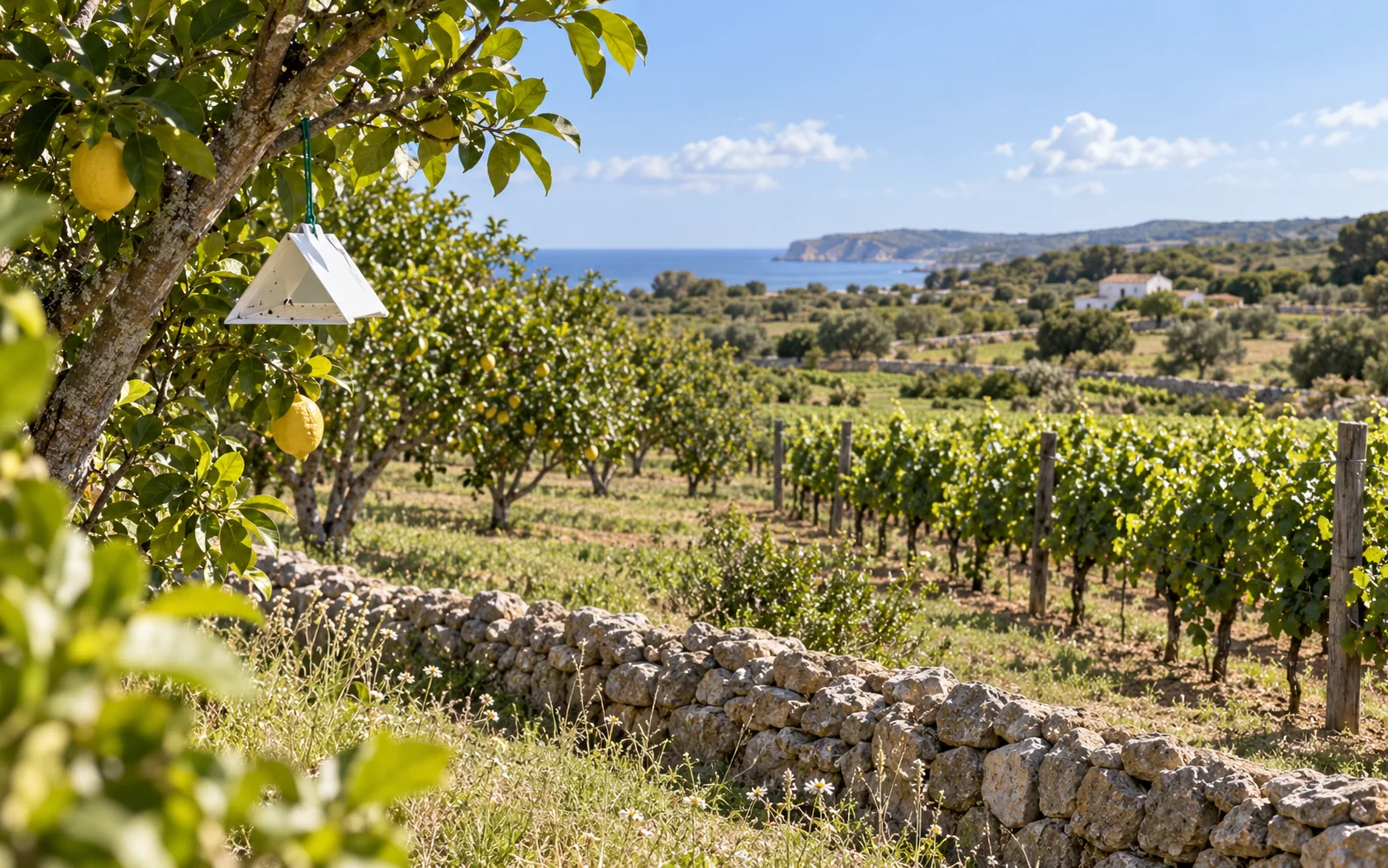
The images shown are illustrative. They must not be presented as proof of an actual detection performed by ECOTRAP nor as a guarantee of automatic identification.

Bactrocera oleae
Tracking of captures and fruit development in olive groves.
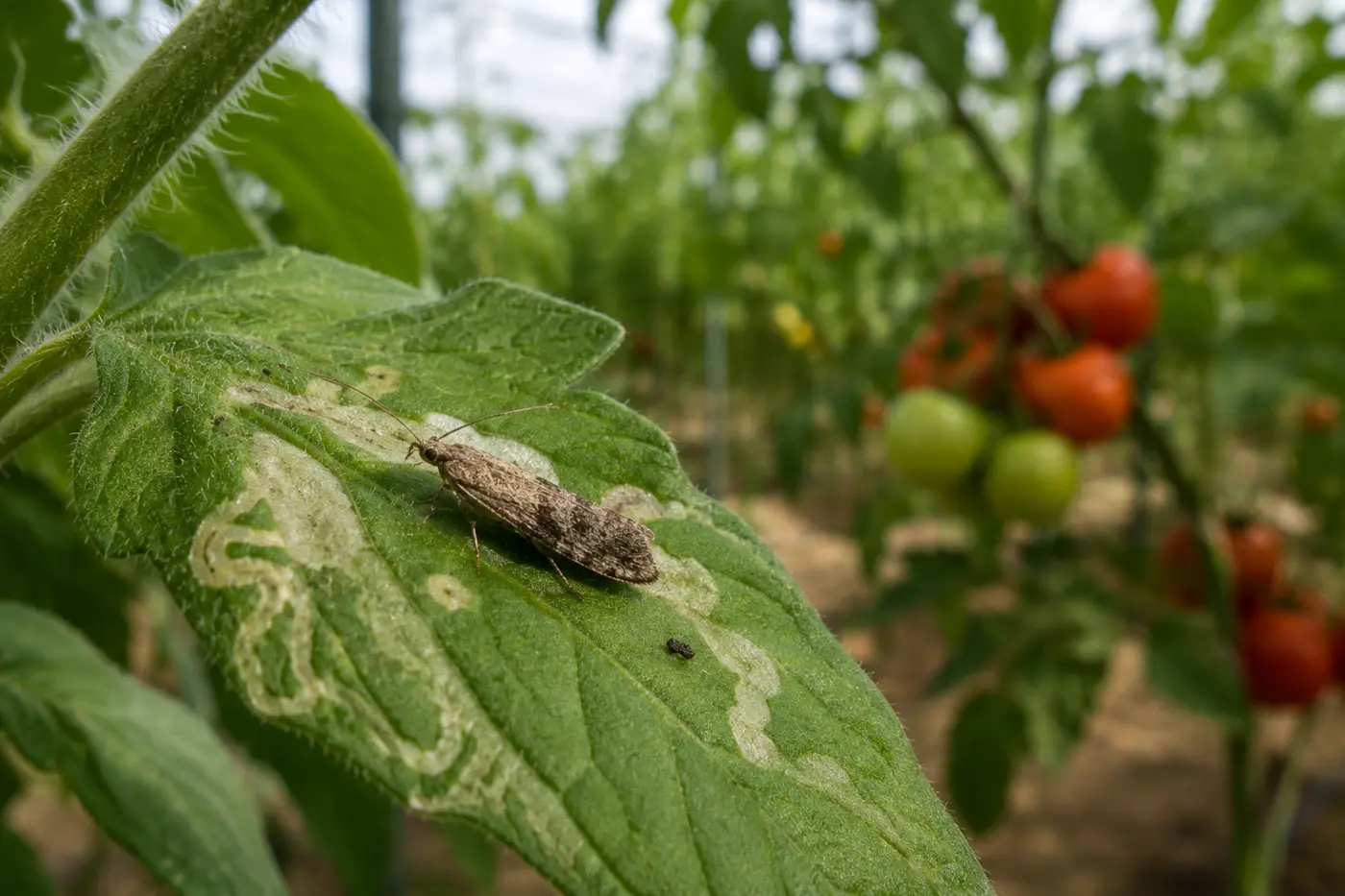
Tuta absoluta
Monitoring of adults and compatible damage in tomato and other vegetable crops.
Ceratitis capitata
Flight evolution and its relation to ripening in fruit trees and citrus.
Rhynchophorus ferrugineus
Alerts and prioritized inspections in palm groves and ornamental trees.
Thaumetopoea pityocampa
Territorial surveillance and verifiable alerts in pine forests.
ECOTRAP turns isolated data into a monitoring sequence. The platform helps distinguish between presence, trend change, sensitive window and the need for technical verification.
The architecture is adaptable, but each deployment must define the target species, trap type, capture protocol, context and decision criteria. The specific coverage must be confirmed during pilot design.
No. It helps prioritize them and arrive with prior information. Inspection, final identification and the decision itself remain with the competent professional.
No. An alert flags a presence or a change that needs review. It must be verified together with the context and the applicable protocol.
It can help document observations and time series for selected groups. Assessing biodiversity requires an adequate sampling design, reliable identification and specialized analysis.
We design a pilot with you with clearly defined objectives, monitoring points, protocol and expected results.